
Project Overview
Built for Next-Generation Scalability
The Antelope Data Campus is a turn-key, master-planned infrastructure ecosystem designed to support high-density compute operations and multi-generational scalability. Spanning approximately 640 acres northwest of Cedar City, the campus seamlessly integrates utility readiness, robust transportation access, and rigorous environmental stewardship into a unified setting.
Planned in five distinct phases, the campus ensures responsible infrastructure scaling that aligns closely with regional growth and community standards.
Campus Architecture & Scale
The master plan features up to five planned specialized technological facilities.
Each facility boasts approximately 1.35 million square feet of advanced operational space. With five planned facilities, the campus will reach up to 6.75 million square feet at full build-out.
Built to support approximately 300 MW of planned on-site power generation per building.
Engineered with underground power infrastructure to minimize the visual footprint across the high-desert landscape.
Outfitted with large, bundled fiber utility corridors to ensure world-class data throughput.
Encircled by vast Bureau of Land Management (BLM) land, the site provides a multi-mile buffer that completely separates the campus from existing residential areas.
Vetted, Turn-Key, & Accountable
The Antelope Data Campus is moving forward through a transparent and rigorous regulatory process. Our Utah-based team has spent over a decade working within the planning frameworks of Iron County and Cedar City. Every phase of our development is designed for long-term accountability to the residents and the land.
Local Land Use
We are securing a Conditional Use Permit (CUP) from the Iron County Planning Commission, operating within existing land-use designations with no rezoning required.
Environmental Accountability
We have already completed a Phase 1 Environmental Site Assessment to ensure the project meets all safety and ecological standards.
Interconnection Security
Infrastructure planning is finalized for our direct pipeline interconnection and high-speed, utility-grade internet access.
Transparent Coordination
Our team maintains ongoing coordination with the Cedar Valley Water Conservancy, regional utility providers, and local business and economic leaders to ensure seamless, responsible growth.
Responsible Resource Management: Our Water Use Plan
Positioned within the Escalante Valley, we maintain a strict commitment to regional sustainability. We strive for a zero net impact on local municipal demand and strictly adhere to regional groundwater management plans.
We recognize and deeply respect the importance of agriculture and farming in this valley. For generations, local families have relied on these shared resources to sustain their livelihoods, and we acknowledge the very real concerns that new development could impact the local water supply. Our goal is to protect, not deplete, the valley’s future.
Today, with advanced engineering and technological design, we can cool and maintain the campus using a fraction of the water that similar large-scale technological campuses have traditionally required. In fact, our projected daily water usage is comparable to the annual water use of just a few typical households.
Rather than seeking to increase the total water drawn from the region, our strategy is to repurpose existing, valid water rights to support the campus, ensuring we operate within the valley’s established limits.
A Look at Our 3-Phase Water Strategy
Construction & Site Preparation
During the roughly 20-year development period, the project will utilize 10 to 20 acre-feet of water annually for dust control, soil compaction, and site preparation.
Closed-Loop System Fill
The cooling infrastructure requires a one-time allocation of 8 acre-feet of water, which will be added gradually in 1.5 acre-foot increments. Once inside the system, this water is continuously recycled and reused within a closed loop.
Ongoing Operations
Daily operations will consume just 12.75 acre-feet of water annually. This water will primarily support restrooms, break rooms, and daily facilities use for our 672 on-site personnel.
Putting Our Annual Water Impact in Perspective
To put our 12.75 annual acre-feet of operational water usage into context for Southern Utah,
our total yearly consumption is equivalent to just:
Securing Our Supply Responsibly
To ensure we do not create new demand or transfer water volume out of the Cedar Valley (Basin 73), our primary objective is to procure sufficient existing water shares from the Escalante Valley (Basin 71) and transfer them directly to the Cedar Valley Water Conservancy. If necessary, we may also utilize dedicated on-site water wells within Basin 71.
Long-Term Community & Operational Vitality
The scale of the Antelope Campus translates directly into economic security for the local workforce.
Sustained operational employment
Beyond temporary construction roles, the campus will support a total of 672 direct on-site positions and 1,802 jobs in total, including induced and indirect jobs from suppliers and new businesses entering the community.
High wages
Direct operational roles average $88,000, while specialized software development, cybersecurity, power engineering, electrical engineering, facilities management, and business management positions range from $108,000 to $128,000.
A multi-generational anchor
With a 20-year local tax projection of over $865 million, rising to over $1.2 billion in total tax revenue flowing directly to Iron County over 20 years, the campus guarantees critical funding for county-wide schools, infrastructure, and public safety.
Iron County & Regional Positioning
An Economic Anchor for Southern Utah’s Evolving Workforce
The Iron County region is defined by its remarkable resilience, rapid civic growth, and strategic position as a crossroads of western commerce. However, recent industrial shifts, including closures of large employers in manufacturing and mining, have underscored the urgent need for stable, forward-looking economic diversification. The Antelope Data Campus is stepping up to meet that need. By establishing a permanent, high-tech foundation in the region, we’re providing hundreds of long-term, direct operational roles that offer livable, family-sustaining wages. We’re proud to invest in Iron County’s workforce, offering a reliable career alternative insulated from global commodity fluctuations and anchored right here at home.
The Antelope Advantage: Stability & Growth
Replacing Displaced Jobs with High-Wage Careers With direct operational wages averaging $88,000 and specialized tech and management roles reaching up to $128,000, we offer sustainable, high-value employment paths that allow local families to thrive without leaving the region or the state.
Day-One Career Pathways with Talent Ready Utah
Through a strategic partnership with Talent Ready Utah, we are aligning our workforce needs with state-supported education incentives. This ensures that specialized curriculum and training programs are in place and active before our doors open, mapping clear, immediate career trajectories for local residents.
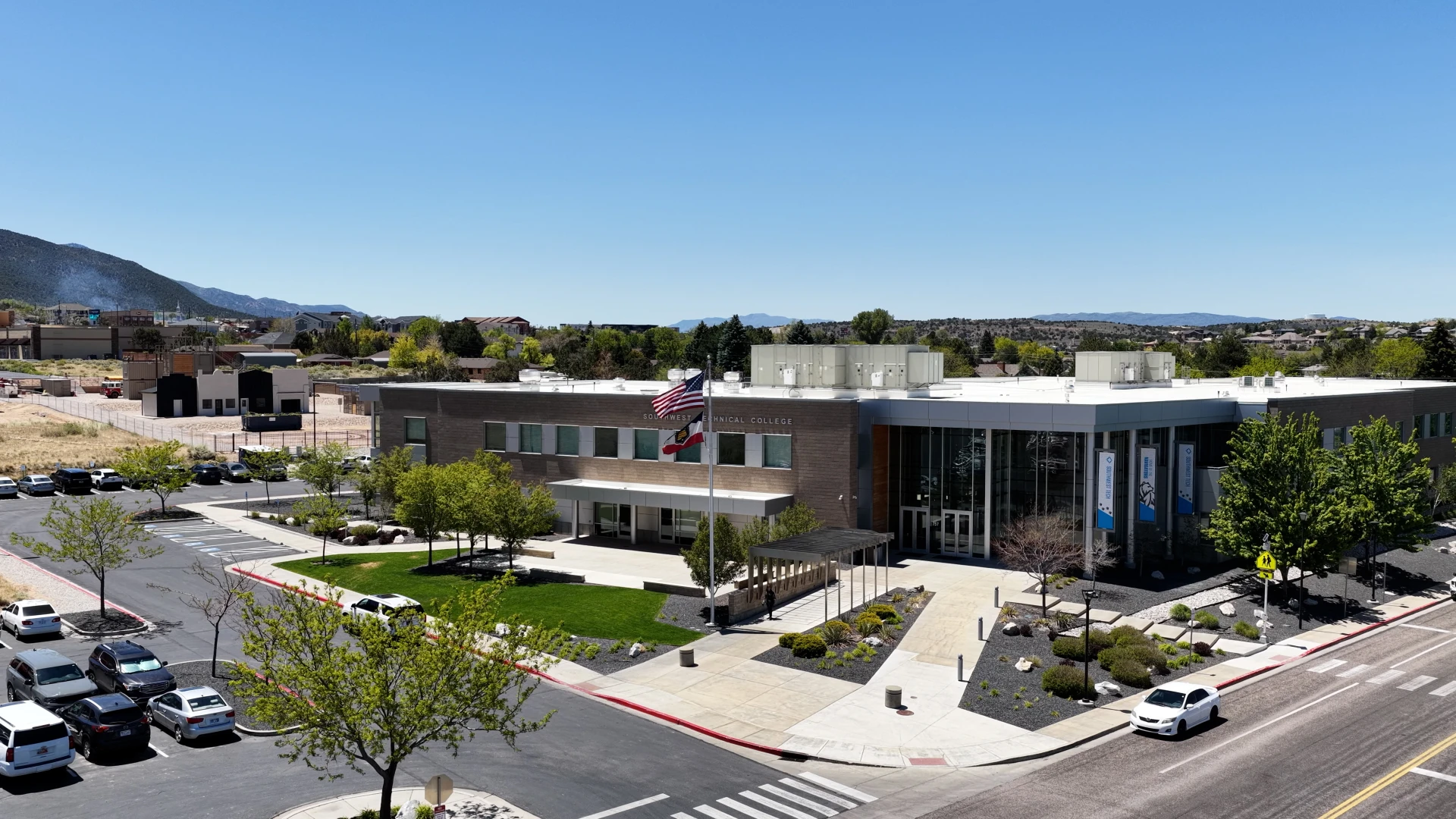
Direct Pipelines via SUU, Southwest Tech, & Utah Tech
We intend to collaborate directly with regional higher educational institutions to design stackable credentials, certificates, and degree pathways. Whether a student is pursuing a technical certification at Southwest Tech or a specialized degree at SUU or Utah Tech, they’ll have a direct, friction-free pipeline into high-tech employment the moment the Antelope Data Campus opens.
A Hub for Next-Generation Innovation
While Cedar City is already celebrated as one of the top three small towns in America for startups, our campus provides the modern digital infrastructure needed to accelerate regional tech expansion and attract more long-term corporate investment, especially in information technology.
Unrivaled Regional Logistics & Connectivity
Positioned at a critical western logistics nexus, the campus capitalizes on immediate access to I-15, nearby regional airports, two active rail transloading facilities, and robust inland port infrastructure.
A Strategic Western Gateway
Our site offers ideal proximity to the major economic hubs of Salt Lake City, Las Vegas, Phoenix, and Denver, allowing companies on our campus to serve the entire Intermountain West at the fastest possible data speeds.
Ensuring Local Revenue Protection & County Control
The long-term financial benefits generated by the Antelope Data Campus are structured to remain entirely within the local community. Decisions regarding the potential creation of a Utah Inland Port Authority project area rest exclusively with Iron County leadership. Furthermore, under current Utah state law, if a county establishes an inland port area, the tax differentials and associated state revenues generated within that area must be disbursed and reinvested in the county of origin.
This statutory protection ensures that the projected hundreds of millions of dollars in tax revenue from the campus remain firmly earmarked for Iron County schools, public safety, and infrastructure, protecting local taxpayers and supporting multi-generational regional growth.
The Long-Term Tenant & Development Lifecycle
Large-scale infrastructure projects advance through an established, multi-phase lifecycle, in which it’s standard industry practice for a master developer to lay the groundwork. It’s exceedingly rare for an ultimate end-user tenant to directly acquire and develop raw land themselves. As a master developer, Pronghorn is currently executing the critical first phase of this value chain, focusing entirely on land preparation, infrastructure planning, and municipal entitlement, which must be fully completed before subsequent phases begin to identify the right builder, operator, and final tenant.
Because securing a long-term tenant typically occurs much later in the development timeline, once a site is legally and physically primed, any current rumors suggesting an end user has already been selected for the Antelope Campus are premature and inaccurate.
About Pronghorn Development
Pronghorn Development powers the future of digital infrastructure while remaining deeply rooted in the communities it serves. With a 20-year track record of building clean energy infrastructure in Iron County, the Pronghorn team has a deep understanding of the local community and landscape. We operate with a profound respect for the natural environment and a steadfast commitment to conservation, leveraging deep, one-on-one collaboration to deliver high-wage opportunities and robust livelihoods that strengthen families and empower local communities.
Ensuring Local Revenue Protection & County Control
The long-term financial benefits generated by the Antelope Data Campus are structured to remain entirely within the local community. Decisions regarding the potential creation of a Utah Inland Port Authority project area rest exclusively with Iron County leadership. Furthermore, under current Utah state law, if a county establishes an inland port area, the tax differentials and associated state revenues generated within that area must be disbursed and reinvested in the county of origin.
This statutory protection ensures that the projected hundreds of millions of dollars in tax revenue from the campus remain firmly earmarked for Iron County schools, public safety, and infrastructure, protecting local taxpayers and supporting multi-generational regional growth.

The Long-Term Tenant & Development Lifecycle
Large-scale infrastructure projects advance through an established, multi-phase lifecycle, in which it’s standard industry practice for a master developer to lay the groundwork. It’s exceedingly rare for an ultimate end-user tenant to directly acquire and develop raw land themselves. As a master developer, Pronghorn is currently executing the critical first phase of this value chain, focusing entirely on land preparation, infrastructure planning, and municipal entitlement, which must be fully completed before subsequent phases begin to identify the right builder, operator, and final tenant.
Because securing a long-term tenant typically occurs much later in the development timeline, once a site is legally and physically primed, any current rumors suggesting an end user has already been selected for the Antelope Campus are premature and inaccurate.
About Pronghorn Development
Pronghorn Development powers the future of digital infrastructure while remaining deeply rooted in the communities it serves. With a 20-year track record of building clean energy infrastructure in Iron County, the Pronghorn team has a deep understanding of the local community and landscape. We operate with a profound respect for the natural environment and a steadfast commitment to conservation, leveraging deep, one-on-one collaboration to deliver high-wage opportunities and robust livelihoods that strengthen families and empower local communities.